
Choosing an enclosed trailer involves more than deciding on the right size or floor plan. Weight is one of the most important specifications because it directly affects towing performance, braking, fuel economy, payload capacity, and the type of tow vehicle you need. That is why many buyers ask, how much do enclosed trailers weigh? The answer depends on several factors, including the trailer’s dimensions, construction materials, axle configuration, and optional equipment.
A small single-axle enclosed trailer weighs much less than a large tandem-axle cargo trailer, and even trailers with similar dimensions can vary considerably because of differences in design. Understanding how much do enclosed trailers weigh helps buyers choose a trailer that matches both their hauling needs and their vehicle’s towing capacity.
Knowing the trailer’s weight before making a purchase also helps prevent overloading, improves highway safety, and ensures compliance with manufacturer towing limits. Rather than focusing only on cargo capacity, buyers should evaluate the trailer’s empty weight, gross vehicle weight rating (GVWR), and intended use together. Learning how much do enclosed trailers weigh makes comparing different trailer models much easier and helps owners avoid expensive towing mistakes.
How Much Do Enclosed Trailers Weigh?
The answer to how much do enclosed trailers weigh depends primarily on the trailer’s size and construction. Small enclosed trailers measuring around 5×8 feet commonly have an empty weight between 900 and 1,200 pounds. Mid-sized enclosed trailers ranging from 6×12 to 7×14 feet often weigh between 1,400 and 2,500 pounds, while larger tandem-axle enclosed trailers can easily exceed 3,000 pounds before any cargo is loaded. Premium commercial trailers or trailers with heavy-duty frames may weigh even more.
Because manufacturers build trailers differently, two enclosed trailers with identical exterior dimensions may have noticeably different weights. Steel frames, aluminum construction, upgraded flooring, reinforced walls, additional doors, interior cabinets, and roof-mounted accessories all influence the final weight. Understanding how much do enclosed trailers weigh means looking beyond the trailer’s dimensions and reviewing the manufacturer’s specifications before making a purchase.
Empty Weight And GVWR Are Different Measurements
One of the biggest misunderstandings among first-time buyers is confusing empty weight with the Gross Vehicle Weight Rating. Empty weight, sometimes called curb weight or dry weight, refers to the trailer before tools, equipment, vehicles, or personal belongings are loaded inside. GVWR represents the maximum safe operating weight of the fully loaded trailer, including the trailer itself and everything it is carrying.
Anyone researching how much do enclosed trailers weigh should pay close attention to both figures. A trailer may have an empty weight of 2,000 pounds but a GVWR of 7,000 pounds, meaning it can safely carry approximately 5,000 pounds of cargo. Choosing a trailer based only on empty weight can lead to overloading or selecting a tow vehicle that lacks sufficient towing capacity.
Several Factors Affect Trailer Weight
Many buyers assume trailer length alone determines weight, but several other design features contribute just as much. Steel trailers generally weigh more than aluminum models, while tandem-axle trailers weigh more than comparable single-axle designs because of their additional suspension components, wheels, and frame reinforcement. Wall thickness, flooring material, roof construction, ramp doors, and insulation also increase overall weight.
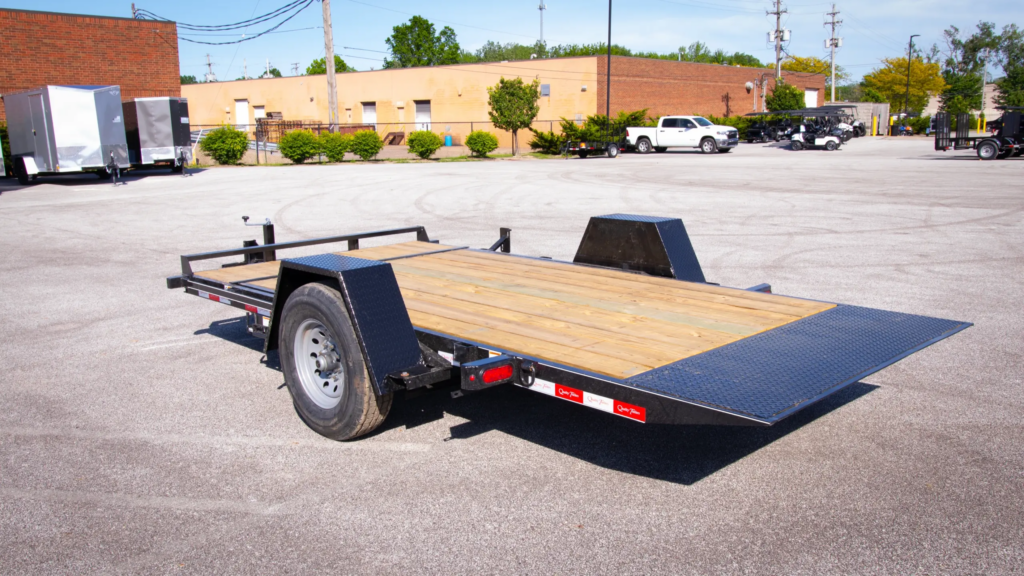
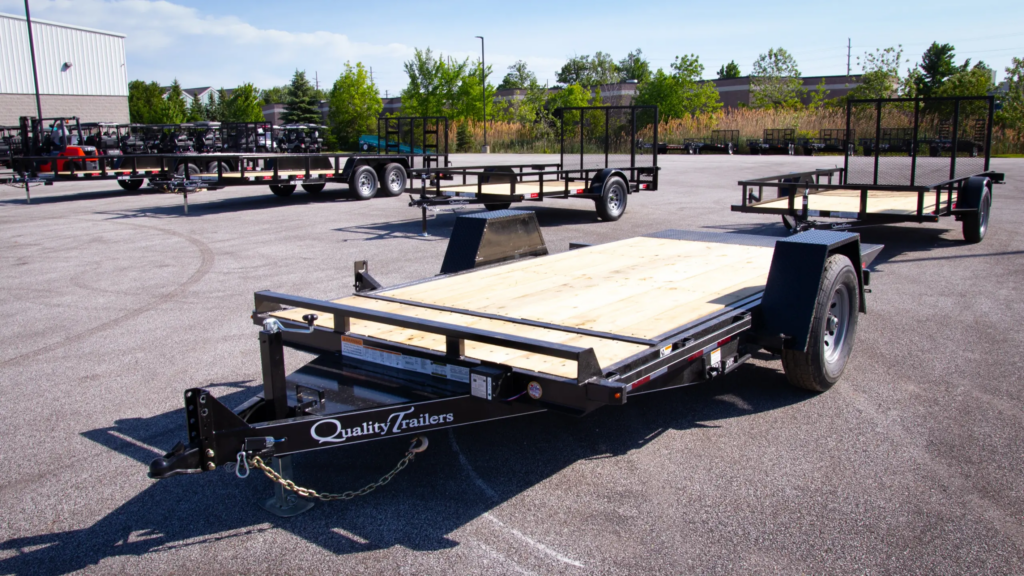
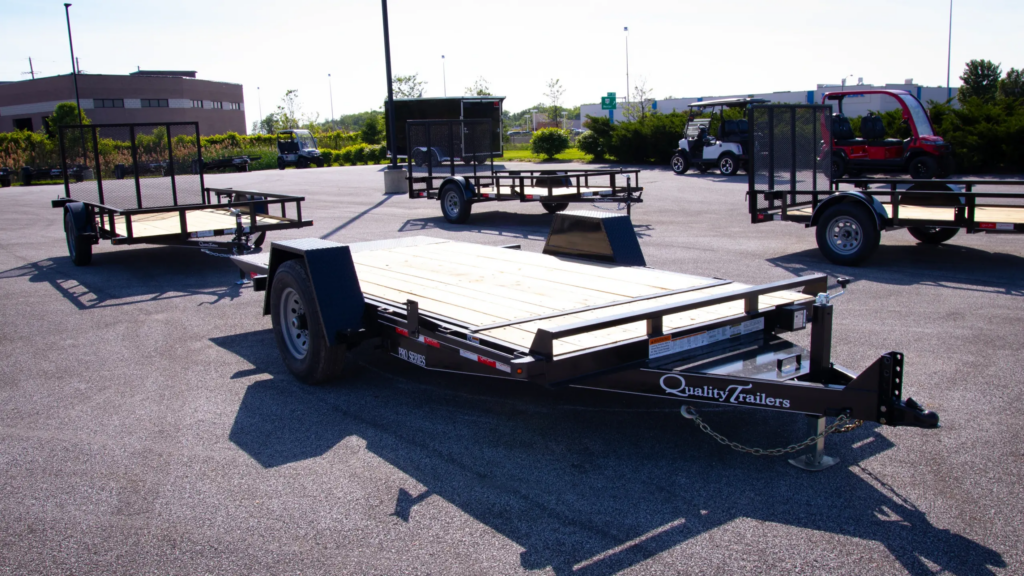
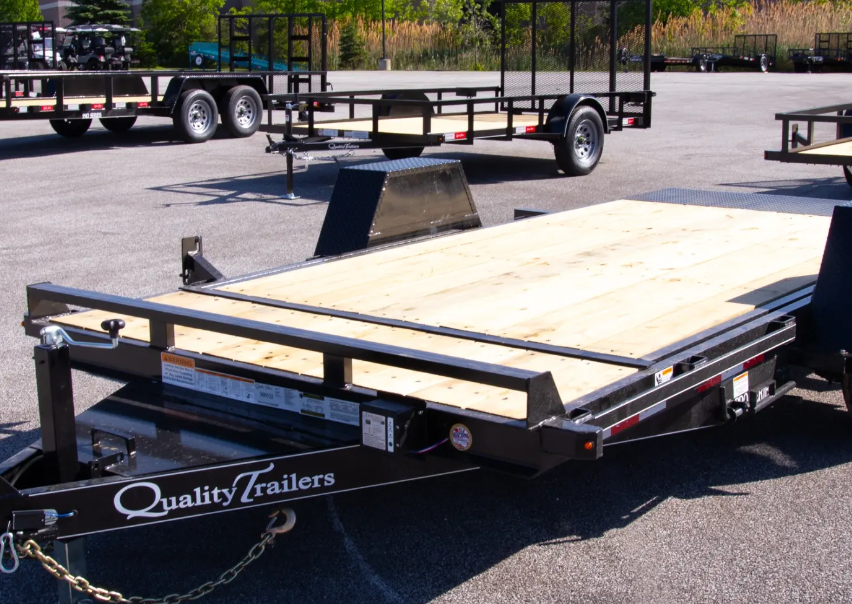
Optional features can add hundreds of additional pounds. Interior shelving, workbenches, generators, electrical systems, spare tires, cabinets, upgraded lighting, and heavy-duty tie-down systems all contribute to the finished trailer weight. Buyers comparing different models can review available Quality Trailers – PRO Grade Equip. Wood Tilt 7K Axle 14′ to better understand how construction choices influence both weight and hauling capability before selecting the right trailer.
Why Trailer Weight Matters Before You Tow
Understanding how much do enclosed trailers weigh is essential because every tow vehicle has maximum towing limits established by the manufacturer. Exceeding those limits places additional strain on the engine, transmission, brakes, suspension, and tires while reducing stability and increasing stopping distance. Even if the trailer appears easy to tow, operating beyond the vehicle’s rated capacity creates unnecessary safety risks.
Before purchasing an enclosed trailer, compare its empty weight and GVWR with your vehicle’s towing capacity rather than estimating based on appearance alone. Selecting a trailer that comfortably fits within those limits provides a safer towing experience, improves handling, and helps protect both the trailer and the tow vehicle throughout years of regular use.
How Cargo Changes The Total Trailer Weight
One of the most important things to understand about how much do enclosed trailers weigh is that the published empty weight is only the starting point. Once you begin loading tools, motorcycles, ATVs, lawn equipment, furniture, construction materials, or other cargo, the total weight increases quickly. Even lightweight cargo can add several hundred pounds, while commercial equipment may push the trailer close to its maximum weight rating.
For this reason, owners should always calculate the combined weight of the trailer and its contents before towing. Loading beyond the trailer’s GVWR not only reduces safety but also increases wear on tires, axles, bearings, suspension components, and brakes. Distributing cargo evenly from front to back also improves stability and reduces trailer sway during highway travel.
Choosing The Right Tow Vehicle
Knowing how much do enclosed trailers weigh helps buyers match the trailer with an appropriate tow vehicle. Every truck, SUV, and crossover has a manufacturer-rated towing capacity that should never be exceeded. Choosing a trailer that falls comfortably below that limit provides better acceleration, shorter stopping distances, improved fuel economy, and greater overall control on the road.
Do not forget to account for passengers, fuel, and equipment carried inside the tow vehicle because these also affect towing performance. Buyers should review both the trailer specifications and the tow vehicle owner’s manual before making a purchase. Taking time to compare these ratings helps prevent expensive towing mistakes while improving safety on every trip.
Do Larger Enclosed Trailers Always Weigh More?
In most situations, larger enclosed trailers do weigh more, but size alone does not determine the final weight. Construction materials, frame design, axle capacity, wall thickness, flooring, and optional equipment all influence the finished trailer. A shorter heavy-duty steel trailer may weigh more than a longer aluminum trailer designed for lighter cargo.
Understanding how much do enclosed trailers weigh means comparing manufacturer specifications instead of estimating by appearance. Buyers should review both the empty weight and the GVWR before deciding between different models. Looking at multiple specifications provides a much more accurate picture of the trailer’s real-world towing requirements than dimensions alone.
Inspect Weight Labels Before Buying
Every enclosed trailer includes a certification label that lists important weight information. Buyers should locate this label before purchasing because it provides the empty weight, GVWR, axle ratings, and tire information needed for safe operation. Reviewing these specifications before towing helps ensure the trailer is suitable for the intended cargo and the available tow vehicle.
For additional guidance on safe trailer loading and towing practices, the National Highway Traffic Safety Administration provides safety information that helps owners understand proper loading, tire maintenance, and towing preparation. Combining manufacturer specifications with safe loading practices helps reduce unnecessary risks while extending trailer life.
Conclusion
So, how much do enclosed trailers weigh? The answer depends on the trailer’s size, construction materials, axle configuration, and installed equipment. Understanding how much do enclosed trailers weigh before purchasing allows buyers to choose a trailer that matches their towing vehicle, hauling needs, and long-term plans. Comparing empty weight, GVWR, and cargo capacity together provides a much clearer picture than looking at size alone. Whether hauling equipment for work or transporting recreational gear, selecting the right trailer weight improves safety, performance, and reliability. To explore dependable enclosed trailer options and receive expert advice, visit Mentor Golf Carts & Trailers.