
A golf cart that refuses to start can make a nearby car and a set of jumper cables look like an easy solution. However, connecting the two without checking the electrical systems first can damage batteries, wiring, or other components. So, can you jumpstart a golf cart with a car? Sometimes, but only in limited situations. A gas golf cart with a compatible 12-volt starting system may allow a carefully performed jump from a 12-volt car battery. A 36-volt or 48-volt electric golf cart battery pack is completely different and should not be jump-started from a standard car battery. Before connecting anything, identify the type of golf cart, its battery voltage, and why it failed to start.
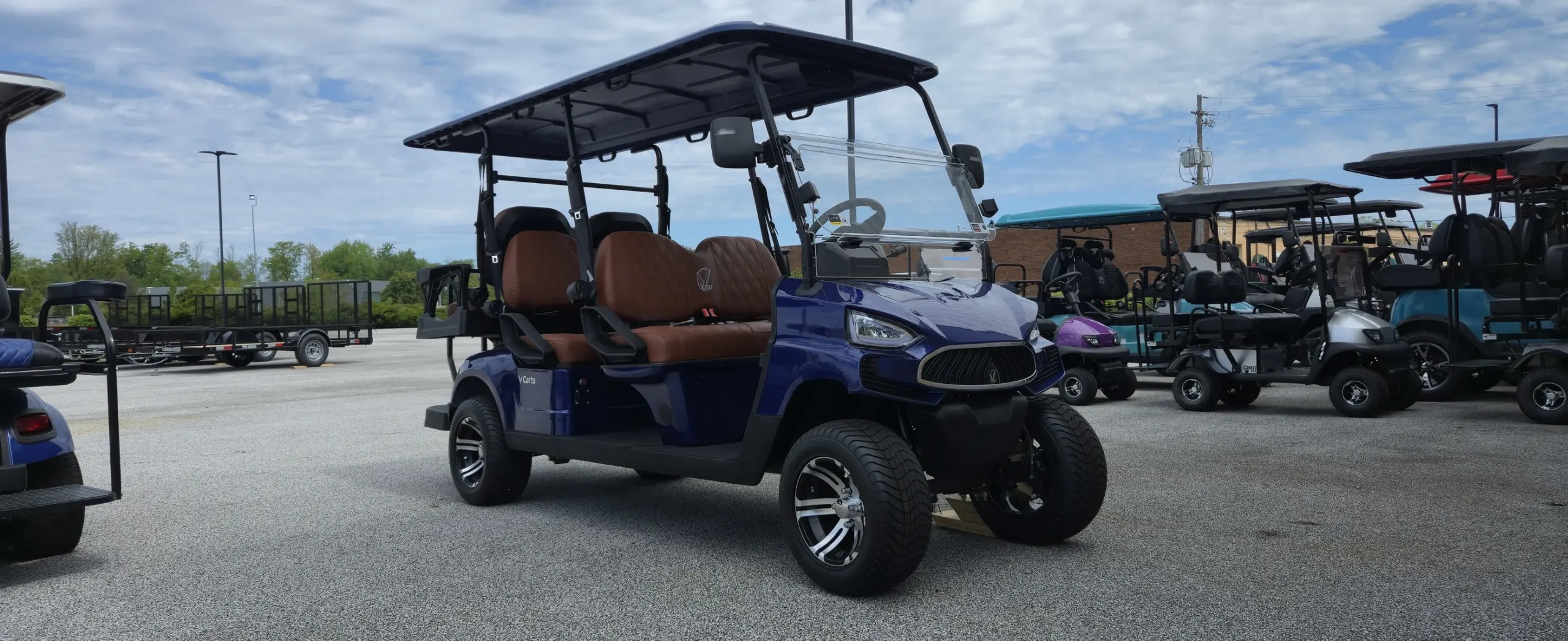
Can You Jumpstart a Golf Cart With a Car?
The answer to can you jumpstart a golf cart with a car depends primarily on whether the cart is gas or electric. Many gas golf carts use a 12-volt battery as part of their starting system. When the cart and donor battery are electrically compatible, a jump may sometimes provide enough temporary power to help diagnose or start a cart with a discharged battery.
An electric golf cart is different. Its traction system may operate at 36, 48, or another voltage using several batteries or a lithium pack. A standard 12-volt automotive battery is not a substitute for that high-voltage pack. Never start connecting jumper cables to individual batteries simply to experiment with the system.
Gas And Electric Golf Carts Need Different Approaches
Understanding can you jumpstart a golf cart with a car starts with identifying the powertrain. A gas cart uses an engine and usually has a battery involved in its starting and electrical system. An electric cart relies on its main battery pack to supply energy to the motor and other electrical components. The two systems should not be treated the same way when troubleshooting a no-start condition.
Check the cart’s battery label, owner’s information, and electrical specifications before using any external power source. If you cannot confidently identify the system voltage, stop there. Guessing based on battery size or cable appearance can turn a discharged-battery problem into damaged electrical equipment.
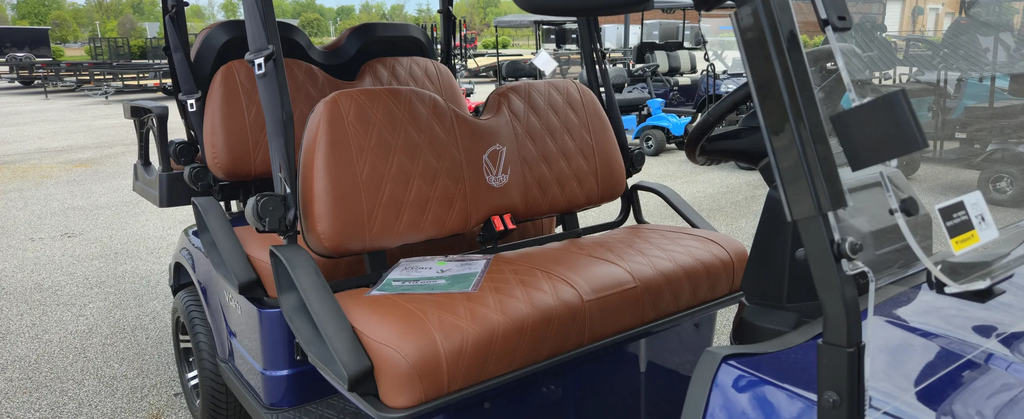
A Car Battery Is Only Suitable When Voltage Is Compatible
One of the most important parts of can you jumpstart a golf cart with a car is voltage compatibility. A typical automotive starting battery is a 12-volt lead-acid battery. Connecting it to equipment designed for a substantially different voltage is not a safe way to provide starting assistance.
The basic chemistry of a lead-acid battery also means owners should take precautions around sparks, damaged cases, leaking electrolyte, and charging gases. Before attempting any compatible 12-volt jump, inspect both batteries. Do not proceed with a battery that is cracked, leaking, badly swollen, frozen, or showing another obvious sign of damage.
Do Not Jump A 36-Volt Or 48-Volt Pack From A Car
For electric-cart owners asking can you jumpstart a golf cart with a car, this is the most important limitation. A car’s 12-volt starting system should not be connected across a 36-volt or 48-volt golf cart traction pack. The voltage mismatch means a conventional automotive jump-start is not the appropriate solution for a discharged electric golf cart.
Do not try to work around the difference by randomly connecting the car battery to one battery within a series-connected pack. The individual batteries operate together as a system, and uneven charging or incorrect connections can create additional problems. A discharged electric cart should be diagnosed and charged using equipment designed for its specific battery chemistry and pack voltage.
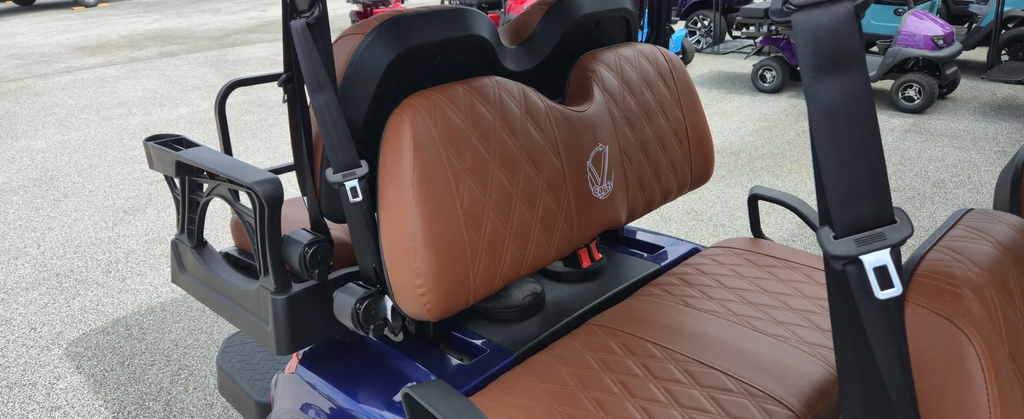
Modern Electric Carts Should Use Their Correct Charging System
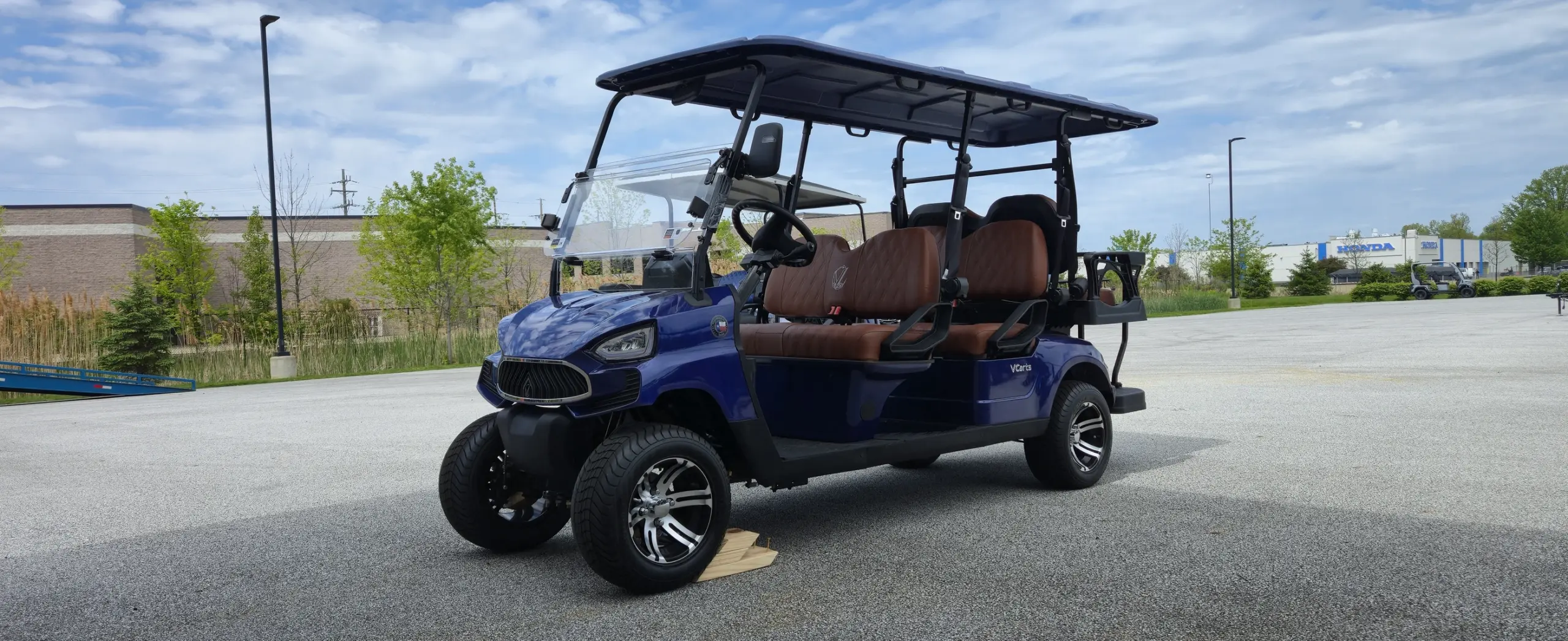
The question can you jumpstart a golf cart with a car often comes from owners who simply need enough power to move a dead electric cart. Modern electric models make proper battery and charger compatibility even more important. For example, the VCart ECO 6 Golf Cart represents the type of current electric passenger cart where owners should follow the charging and electrical requirements designed for the vehicle rather than applying automotive jump-start habits.
If a modern cart will not respond after normal charging, investigate the battery state, charger, connections, main electrical controls, and other possible faults. Supplying power from an unrelated source can mask the original problem while introducing a new one.
Use Extra Caution With A Compatible 12-Volt Gas Cart
If you are still asking can you jumpstart a golf cart with a car after confirming that the gas cart uses a compatible 12-volt starting battery, check the cart manufacturer’s procedure before connecting anything. Both vehicles should be switched off, parked securely, and kept from touching each other. Confirm positive and negative terminals carefully because reversing polarity can damage electrical components. Never attempt a jump when either battery is leaking, swollen, cracked, frozen, or otherwise damaged. If the battery specifications or terminal connections are unclear, using the correct charger or having the cart diagnosed is safer than experimenting with jumper cables.
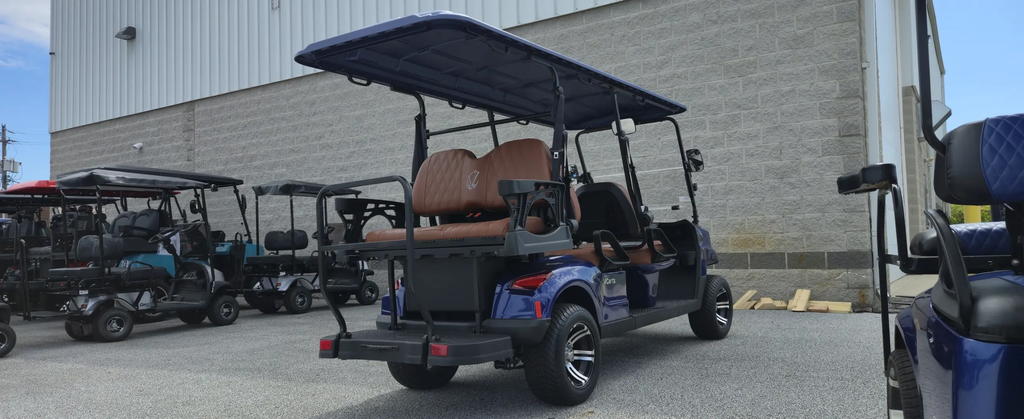
Keep The Car Engine Off During The Jump
When considering can you jumpstart a golf cart with a car, do not assume the donor car should be running as it commonly is during an automotive jump-start. If the cart manufacturer permits assistance from a compatible 12-volt automotive battery, keeping the car engine off avoids exposing the golf cart’s electrical system to the donor vehicle’s charging output. Follow the golf cart manufacturer’s specified connection and disconnection procedure rather than relying on a generic cable sequence. Once connected correctly, attempt to start the gas cart only as directed. If it does not respond after a reasonable attempt, disconnect the setup and diagnose the underlying problem instead of repeatedly cranking or changing connections.
A Successful Jump Does Not Mean The Battery Is Healthy
Even when the answer to can you jumpstart a golf cart with a car is yes for a compatible gas model, needing a jump usually points to another issue. The battery may simply have discharged because the cart sat unused, but it could also be aging, failing to hold a charge, or receiving insufficient charging while the cart operates. Loose or corroded connections can produce similar symptoms.
If the cart starts after receiving temporary assistance, do not assume the problem has been repaired. Inspect the battery terminals and charging system and determine why the battery became discharged. A cart that repeatedly needs outside power should be tested rather than jump-started every time it is used.
A No-Start Problem May Have Nothing To Do With The Battery
Sometimes owners researching can you jumpstart a golf cart with a car assume a weak battery is responsible simply because the cart will not move or start. Gas golf carts can also experience problems involving cables, switches, solenoids, starter-generator systems, fuel delivery, ignition components, or other electrical and mechanical parts. Electric carts have their own possible faults involving the battery pack, charger, controller, solenoid, wiring, and related systems.
Repeated Starting Problems Need Proper Diagnosis
If can you jumpstart a golf cart with a car has become a regular question rather than a one-time emergency, the underlying problem needs attention. Repeatedly providing temporary power will not repair an aging battery, poor cable connection, faulty charging system, or failing starting component. It may also leave you stranded again as soon as the cart is switched off.
The Mentor Golf Carts & Trailers Service Department can inspect starting, charging, battery, and electrical problems when basic checks do not identify the cause. Testing the system can determine whether the battery actually needs replacement or another component is preventing the cart from starting normally.
Conclusion
So, can you jumpstart a golf cart with a car? A compatible 12-volt gas golf cart may allow battery assistance when the manufacturer’s procedure permits it, but a car should not be used to jump a 36-volt or 48-volt electric traction pack. Confirm voltage and polarity before making any connection, and keep the donor car off when appropriate. If the cart repeatedly needs a jump, diagnose the battery and charging system instead of treating temporary external power as a permanent solution.