
Transporting a golf cart looks straightforward until the trailer starts moving and every turn, bump, and braking force begins acting on the load. A cart that seems secure while parked can shift if the tie-down points or straps are poorly chosen. Learning how to strap a golf cart to a trailer starts with choosing a suitable trailer, checking its capacity, positioning the cart correctly, and using properly rated tie-down equipment. The goal is not simply to stop the cart from rolling. It needs to remain secure during acceleration, braking, cornering, and normal road vibration. A careful loading and securement routine protects the golf cart, trailer, tow vehicle, and everyone sharing the road.
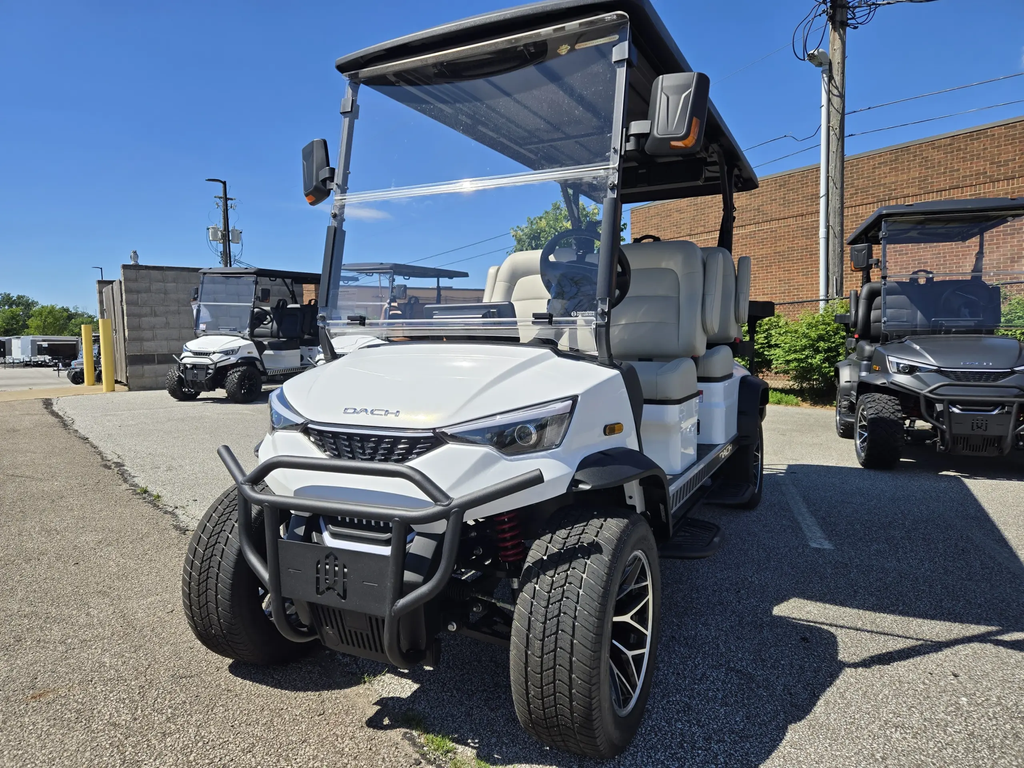
How to Strap a Golf Cart to a Trailer Safely
The basic approach to how to strap a golf cart to a trailer is to secure the vehicle using strong attachment points and properly rated tie-downs. Park the trailer on firm, level ground, load the cart carefully, position it appropriately for the trailer, and set the parking brake. Turn the cart off and remove the key before beginning the tie-down process.
Use quality ratchet straps or other vehicle-rated securement equipment with adequate working load limits. Attach them only to strong structural points that can safely handle restraint forces. Avoid plastic body panels, roof supports, steering components, or other parts that were never designed to serve as tie-down locations.
Make Sure The Trailer Can Carry The Golf Cart
Before deciding how to strap a golf cart to a trailer, confirm that the trailer itself is appropriate. Check its gross vehicle weight rating, payload capacity, deck dimensions, ramp capacity, and available tie-down points. Remember that payload is not the same as the trailer’s total GVWR because the trailer’s own weight uses part of that rating.
The golf cart’s actual weight also matters. Batteries, rear seats, lift kits, larger tires, enclosures, and accessories can increase weight beyond what someone expects from a basic cart. Never choose a trailer solely because the cart physically fits between its sides. Weight capacity and safe loading matter just as much as deck dimensions.
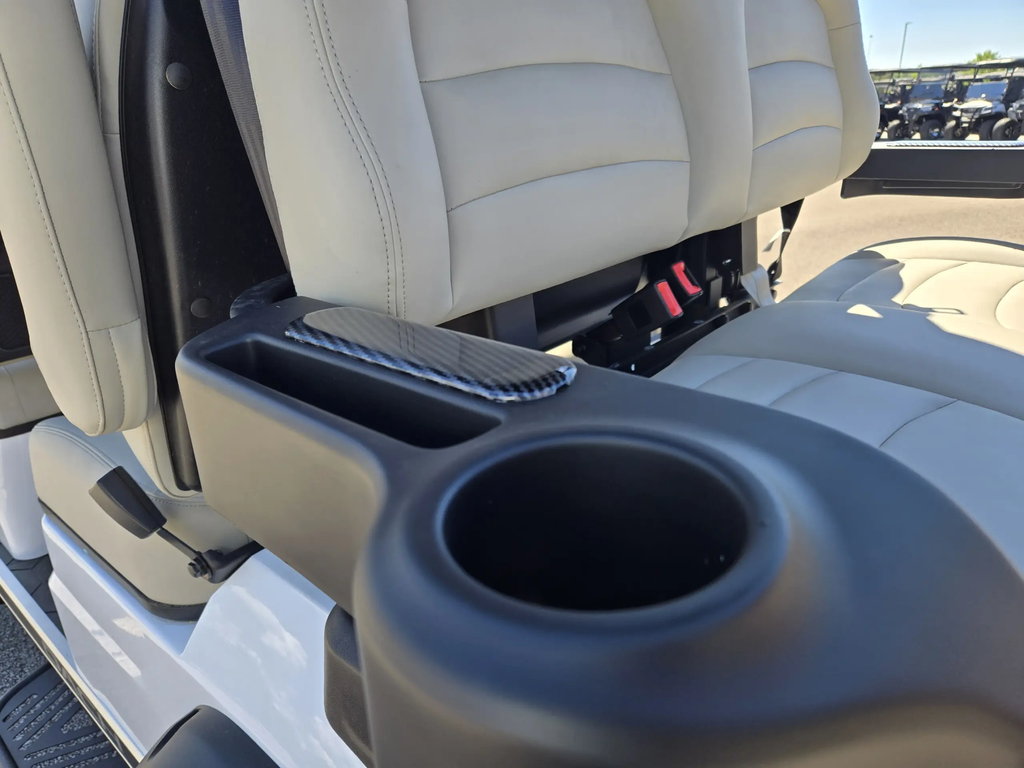
Check Cart Dimensions And Weight Before Loading
Understanding how to strap a golf cart to a trailer becomes especially important with larger passenger carts. A four-passenger or six-passenger model can be longer and heavier than a traditional two-seat course cart. Measure the cart’s overall length and width and compare those figures with the trailer deck and ramp before loading.
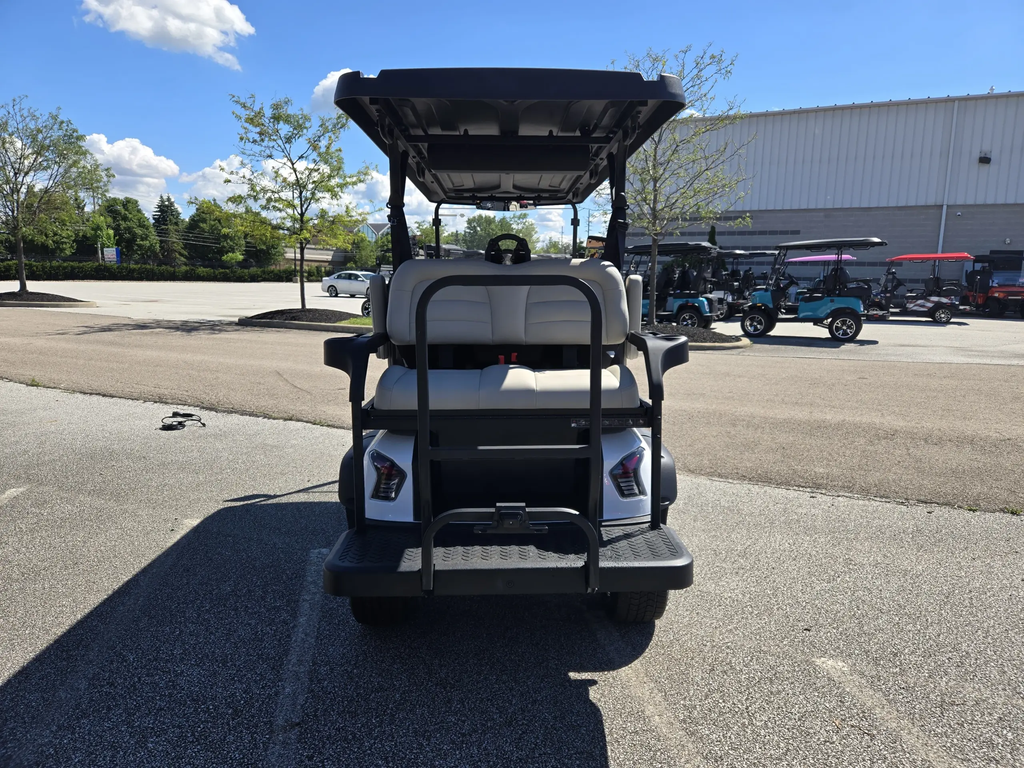
A larger electric model such as the DACH Apollo 4+2 Rider also illustrates why owners should evaluate the exact vehicle rather than relying on a generic golf cart weight estimate. Passenger configuration, batteries, accessories, and equipment all affect transportation requirements. Confirm the specifications for your particular cart before selecting the trailer and tie-down equipment.
Position The Golf Cart Correctly On The Trailer
Proper positioning is a major part of how to strap a golf cart to a trailer because load placement affects trailer stability. Do not simply drive the cart as far forward as possible and assume that position is safest. The trailer and tow vehicle need an appropriate load distribution and tongue weight for stable towing.
Load on level ground and move slowly while another person guides you when possible. Keep the cart centered from side to side and avoid positioning it where tires, bumpers, or accessories interfere with the trailer structure. Follow the trailer and tow-vehicle manufacturers’ loading guidance when determining final placement. Poor weight distribution can contribute to unstable towing even when the golf cart itself is securely strapped.
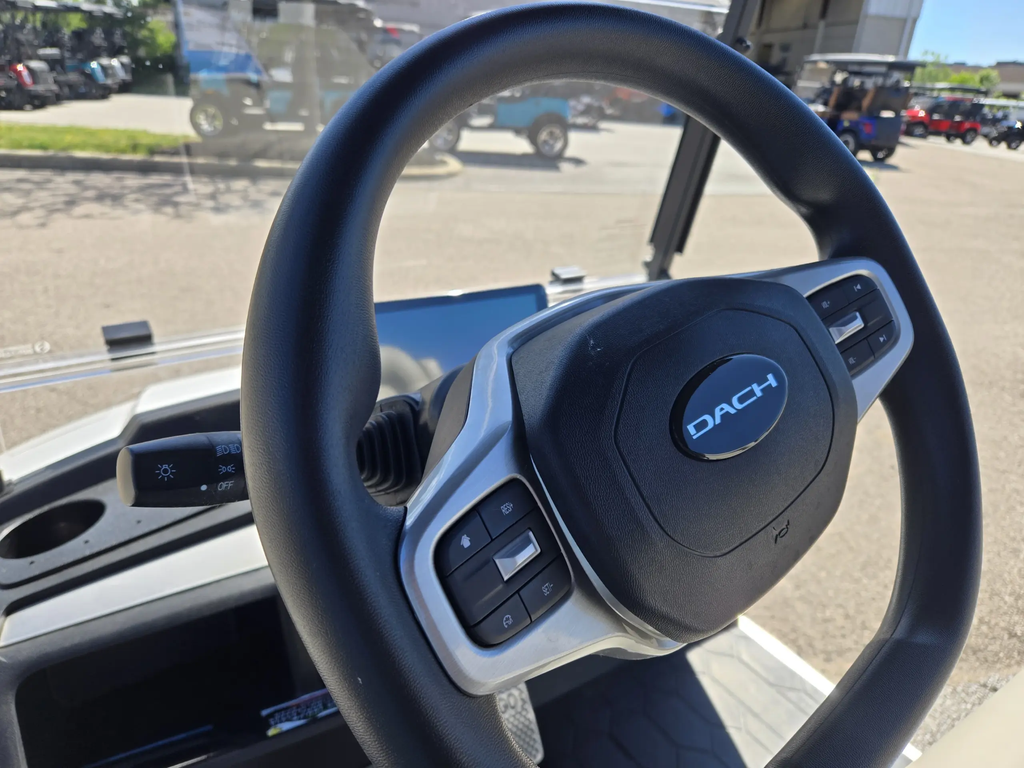
Use Properly Rated Tie-Down Equipment
The straps are critical when learning how to strap a golf cart to a trailer. The Federal Motor Carrier Safety Administration cargo securement guidance explains the importance of preventing cargo from shifting, rolling, tipping, or falling during transportation. While FMCSA regulations primarily govern commercial transportation, the securement principles demonstrate why appropriate restraints and adequate working load limits matter.
Inspect every strap before use. Do not use webbing with cuts, severe abrasion, damaged stitching, bent hooks, or ratchets that do not operate correctly. Also inspect the trailer’s anchor points. A strong strap cannot provide reliable restraint when attached to a weak or damaged anchor.
Secure The Front And Rear Of The Golf Cart
A dependable setup for how to strap a golf cart to a trailer should restrain movement in more than one direction. Use secure structural attachment points toward the front and rear of the cart so it cannot easily roll forward, backward, or shift sideways. Route each strap so it remains clear of sharp edges, hot components, brake lines, wiring, and moving suspension parts. Tighten the ratchets evenly until the cart is firmly restrained without applying unnecessary force. The parking brake can provide additional stability while loading, but it should never replace proper tie-downs. Before towing, push against the cart from different directions and confirm that the vehicle remains stable on the trailer.
Avoid Strapping To Weak Golf Cart Components
Choosing attachment points is one of the most important parts of how to strap a golf cart to a trailer. Do not hook straps to plastic body panels, bumpers that are not designed for securement, roof supports, steering parts, or decorative accessories. These components can bend, crack, or detach when the straps experience force during braking or over rough roads.
Use strong structural locations recommended for your particular cart whenever that information is available. Frame or suitable suspension attachment points may be appropriate on some models, but designs vary. Avoid routing webbing where it can rub against a sharp metal edge because vibration during transportation can gradually damage the strap.
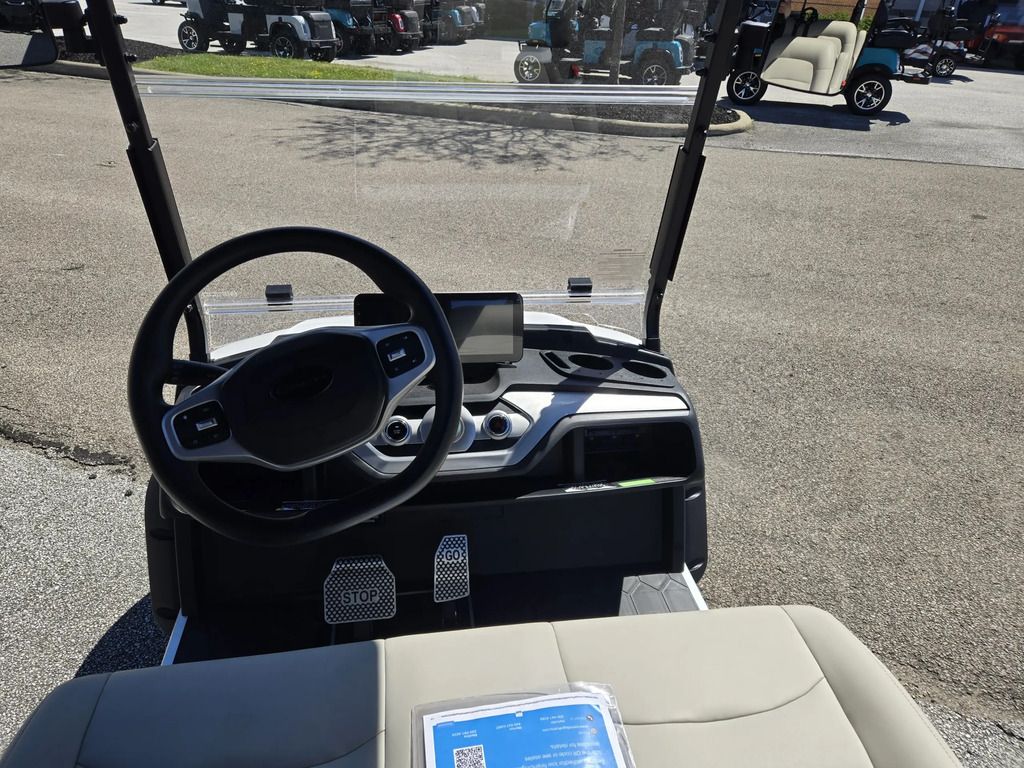
Secure Loose Accessories Before Towing
Knowing how to strap a golf cart to a trailer also means securing more than the vehicle itself. Remove or secure anything that could move or detach at highway speeds. Golf bags, storage-bin contents, removable windshields, seat covers, chargers, loose floor items, and other accessories can become hazards if left unsecured.
Fold or secure components according to their manufacturer’s instructions and check that the windshield, roof, rear seat, and other installed accessories are firmly mounted. Never assume an accessory that stays in place at normal golf cart speeds will remain secure when exposed to much stronger airflow during trailer transportation.
Recheck The Straps Shortly After Starting The Trip
A final inspection before departure is essential when learning how to strap a golf cart to a trailer, but securement should not end there. Straps can settle after the trailer begins moving, especially as the cart’s tires and suspension respond to road vibration. Stop in a safe location shortly after beginning the trip and check every tie-down again.
Make sure the ratchets remain locked, hooks are seated correctly, and no strap has become loose or started rubbing against another component. Recheck the load during longer trips and after unusually rough roads. This quick habit can catch a developing securement problem before the cart has enough room to shift.
Conclusion
Learning how to strap a golf cart to a trailer comes down to proper preparation and secure attachment. Confirm the trailer can handle the cart’s size and weight, position the load correctly, use rated tie-down equipment, and secure the vehicle from strong structural points. Avoid attaching straps to body panels or weak accessories, and inspect the entire setup after the first part of the trip. Buyers can explore available models and dealership support through Mentor Golf Carts & Trailers before deciding which cart fits their needs.