
Many buyers assume golf carts use very small engines with minimal power, but modern carts often deliver much more performance than people expect. That is one of the biggest reasons owners search how much horsepower does a golf cart have before buying, upgrading, or comparing gas and electric models. Most standard golf carts produce between 10 and 15 horsepower, although exact numbers vary depending on engine size, motor setup, passenger capacity, and intended use. Some utility-focused or high-performance carts, can exceed those numbers significantly. Understanding how much horsepower does a golf cart have helps buyers choose the right balance between speed, towing ability, hill climbing, and long-term driving performance.
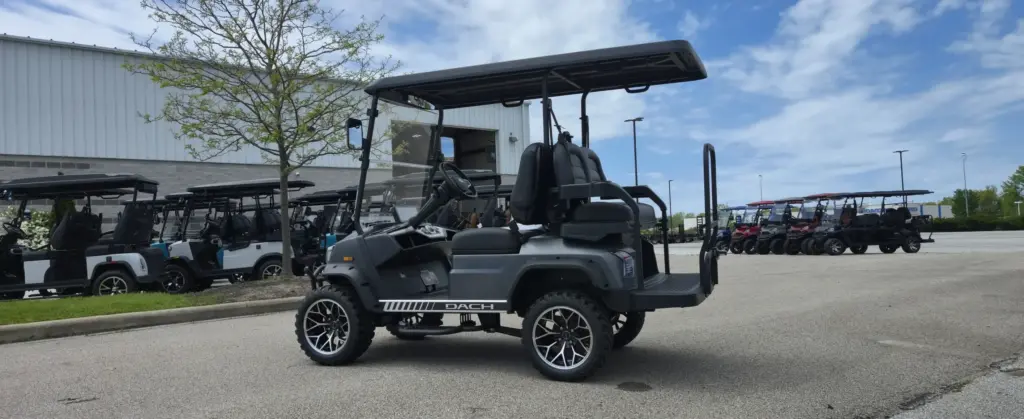
Most Standard Golf Carts Produce Between 10 And 15 Horsepower
The most common answer to how much horsepower does a golf cart have is around 10 to 15 horsepower for standard gas-powered models. These engines are intentionally designed for reliability, fuel efficiency, and smooth low-speed operation rather than extreme acceleration or highway-level performance. While those horsepower numbers may sound low compared to automobiles, golf carts are lightweight vehicles that require far less power to move effectively. Modern golf carts can comfortably transport passengers, golf equipment, and cargo around courses, neighborhoods, campgrounds, and private properties using relatively small engines. Buyers comparing modern recreational transportation often explore models like the Dach Falcon 2+2 Ultra Rider when evaluating passenger capacity, comfort, and overall driving performance before purchasing.
Electric Golf Carts Use Different Power Measurements
One reason people continue searching how much horsepower does a golf cart have is that electric golf carts measure performance differently than gas-powered carts. Electric carts are commonly rated by voltage and motor wattage instead of traditional horsepower numbers. However, electric motor output can still be converted into approximate horsepower equivalents. Many electric golf carts deliver power comparable to gas carts in the 10 to 15 horsepower range, while premium lithium-powered systems may exceed those numbers during acceleration. Electric motors also produce instant torque, which allows many electric carts to feel quicker than their horsepower rating might suggest. This immediate power delivery is one reason electric golf carts often perform very well on hills and during stop-and-go driving.
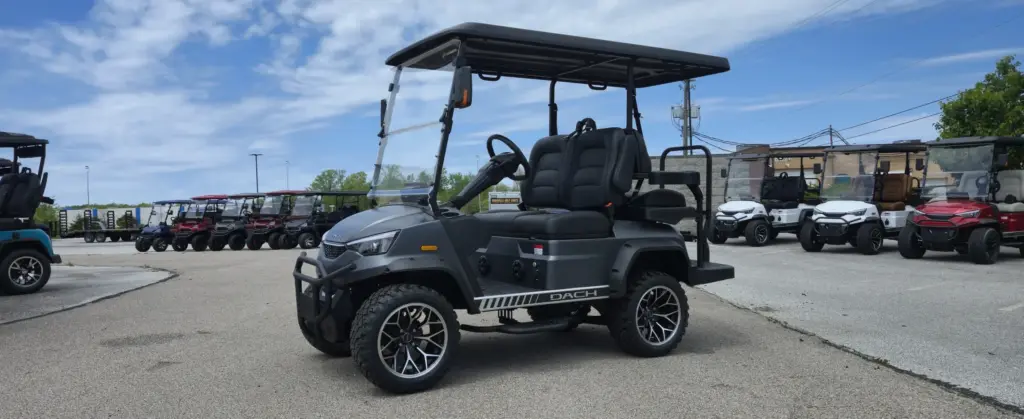
Horsepower Directly Affects Golf Cart Performance
Another important factor tied to how much horsepower does a golf cart have is how horsepower impacts real-world driving performance. Higher horsepower generally improves acceleration, hill-climbing ability, towing strength, and passenger capacity. Larger carts carrying multiple passengers or cargo require more power to maintain consistent performance on uneven terrain. Smaller golf carts used mainly on flat golf courses can often operate comfortably with lower horsepower setups. Buyers should also remember that horsepower alone does not determine overall performance because gearing, tire size, weight, and battery efficiency also affect driving experience significantly. A properly balanced setup often matters more than chasing the highest horsepower numbers available.
Typical Golf Cart Horsepower By Vehicle Type
Many buyers researching how much horsepower does a golf cart have want quick comparisons between different golf cart categories. The table below highlights common horsepower ranges based on cart type.
| Golf Cart Type | Typical Horsepower Range |
|---|---|
| Standard Gas Golf Cart | 10-15 HP |
| Standard Electric Golf Cart | 10-15 HP Equivalent |
| Lifted Golf Cart | 14-20 HP |
| Utility Golf Cart | 15-25 HP |
| Performance Golf Cart | 20+ HP |
Actual performance varies depending on vehicle weight, tire setup, battery configuration, and intended driving conditions.
Buyers researching small vehicle engine performance and electric transportation systems often review information from the U.S. Department of Energy when learning about electric motor efficiency, vehicle power systems, and battery technology.
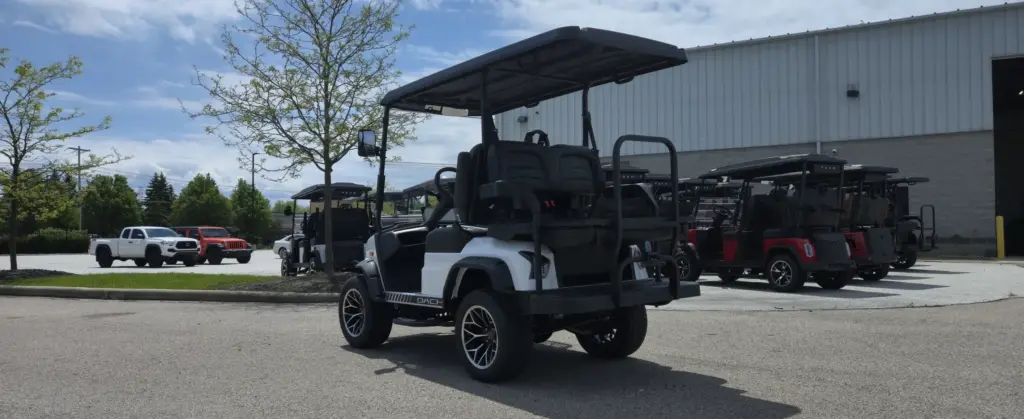
Lifted Golf Carts Often Need More Horsepower
Lifted golf carts frequently require additional horsepower because larger tires and higher ride heights increase strain on the drivetrain. Oversized wheels create more rolling resistance, especially on hills or rough terrain. Some owners install lift kits and bigger tires without upgrading engine components, which can reduce acceleration and overall responsiveness. Buyers interested in lifted recreational transportation often compare models like the Whisper EV W3 when evaluating modern lifted golf cart performance and upgraded driving capability. Matching horsepower to tire size and overall vehicle weight helps maintain smoother acceleration and more reliable long-term performance.
Horsepower Is Not The Same As Top Speed
Many people searching how much horsepower does a golf cart have assume horsepower directly determines maximum speed, but that is not always true. Top speed depends on several factors, including gearing, governor settings, tire size, weight, and electronic speed limitations. Some lower-horsepower carts may still achieve respectable speeds through efficient gearing, while higher-horsepower carts may prioritize towing ability or climbing performance instead of maximum speed. Buyers should focus on overall driving feel and intended usage rather than horsepower numbers alone when comparing golf cart performance.
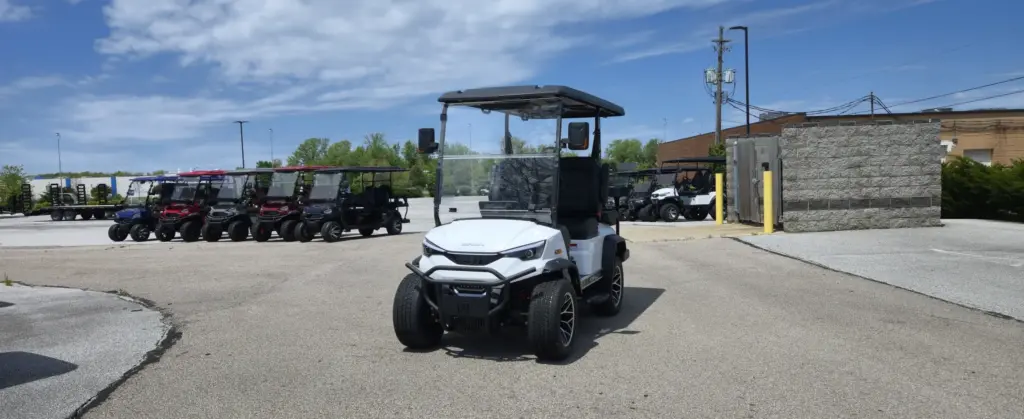
Modern Golf Carts Continue Becoming More Powerful
The answer to how much horsepower does a golf cart have continues changing because manufacturers now build golf carts for much more than golf-course transportation. Modern carts are increasingly used for neighborhood transportation, utility work, campground travel, and recreational driving. As buyer expectations rise, manufacturers continue introducing stronger motors, improved lithium battery systems, upgraded controllers, and more advanced drivetrains that deliver better performance than older traditional carts. Today’s premium golf carts often feel significantly more powerful and refined compared to models built only a decade ago.
Choosing The Right Power Level Matters More Than Maximum Horsepower
Many buyers researching how much horsepower does a golf cart have eventually realize that the highest horsepower setup is not always the best choice for everyday use. Neighborhood drivers may prioritize quiet operation and battery efficiency, while utility owners may focus more on towing ability and climbing strength. Golfers using carts primarily on flat courses often do not need aggressive high-performance setups. Choosing a golf cart with balanced performance that matches actual driving conditions usually provides a better ownership experience than chasing maximum horsepower alone. Reliability, comfort, and efficiency often matter more over time than raw power numbers.
Conclusion
The average answer to how much horsepower does a golf cart have is usually between 10 and 15 horsepower, although lifted, utility, and performance-focused carts may produce significantly more. Gas and electric carts measure power differently, but both can deliver strong real-world performance depending on setup and intended use. Buyers who understand how horsepower affects acceleration, climbing ability, towing strength, and overall driving feel can make smarter purchasing decisions before investing in a cart. Anyone looking for golf cart inventory, upgraded performance models, or neighborhood transportation solutions can contact Mentor Golf Carts & Trailers for additional information and available vehicle options.