
If you run a lawn care or landscaping business, sooner or later, you face a critical question: What kind of trailer do I need for landscaping? Your trailer is the backbone of your operation. It’s how you move mowers, trimmers, blowers, materials, and debris from one property to the next. Choosing the wrong trailer can slow you down, limit the jobs you can take, and create safety headaches you don’t need.
Start With What You Haul Every Day
The first step in deciding what kind of trailer you need for landscaping is to look closely at your everyday equipment. Think about your mowers, whether they’re walk-behind, stand-on, or zero-turn. Consider how many you bring to a job and how often you transport them. Factor in handheld equipment like string trimmers, blowers, hedge trimmers, and chainsaws, as well as bags of mulch, soil, or other materials. The more clearly you define your daily load, the easier it is to pick the right trailer.
You also want to think ahead to what your business will look like in a year or two. If you plan to add crews, upgrade to larger mowers, or expand into more demanding work, you may want a trailer that has some room to grow. Picking a trailer that barely fits today’s setup can force you into another upgrade sooner than you’d like.
Open Trailer vs. Enclosed Trailer for Landscaping
One of the most significant decisions when choosing a landscaping trailer is whether to go with an open or a closed design. An open landscaping trailer is a traditional option. It keeps your equipment easily accessible, allows for quick loading and unloading, and usually costs less than an enclosed trailer of the same size. Open trailers are great for crews that are constantly moving from property to property and need to roll mowers on and off all day.
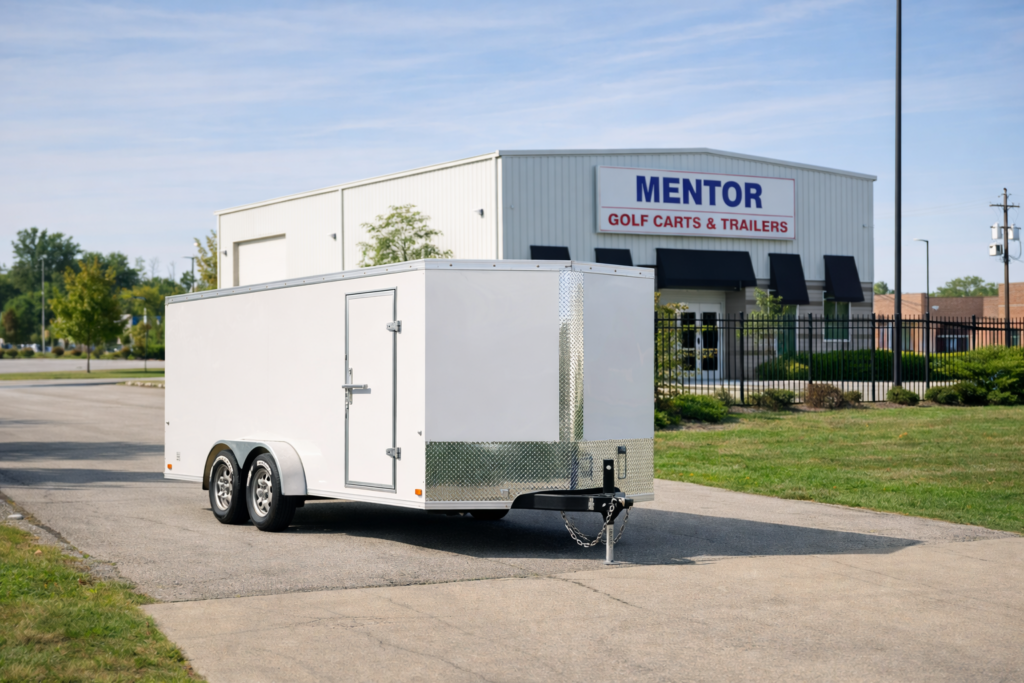
An enclosed trailer offers more protection and security. Because the equipment is inside, it’s better protected from the weather and prying eyes. Many landscapers like enclosed trailers because they can be locked up at the end of the day and used as a mobile shop, with shelves, racks, and hooks mounted inside. The tradeoff is higher cost, extra weight, and sometimes more difficulty loading tall equipment, depending on the ramp and interior height.
Size and Capacity Considerations
Once you decide between open and enclosed, the next factor in choosing the right trailer for landscaping is size and capacity. You need a trailer with enough deck length and width to safely carry your mowers and tools without cramming everything together. Trailer length affects how many units you can carry and how easily you can maneuver in tight residential neighborhoods.
Weight capacity is just as important. Your equipment, materials, and debris add up quickly, so make sure the trailer you choose has a gross vehicle weight rating that comfortably exceeds what you plan to haul. Running a trailer constantly at or beyond its maximum capacity can lead to premature wear and safety risks on the road.
Ramps, Tie-Downs, and Layout
The details of how you use the trailer day to day also help answer what kind of trailer you need for landscaping. A good landscaping trailer should have a strong, appropriately sized ramp or gate that makes loading mowers smooth and safe. Many landscapers prefer a fold-down ramp gate on an open trailer because it simplifies loading at each stop.
Tie-down points are another key consideration. You’ll want multiple strong anchor points to secure your mowers and other heavy equipment so they don’t shift during transport. Side rails, D-rings, and E-tracks all help keep your load stable. In an enclosed trailer, the layout of your racks, shelves, and hooks will determine how efficiently your crew can grab tools and get to work.
Durability and Maintenance
Landscaping is hard on equipment, and your trailer is no exception. When choosing a landscaping trailer, pay attention to its build quality. Look at the frame, axle rating, flooring material, and overall construction. A well-built trailer with a solid frame and quality components may cost more upfront, but it can save you money and frustration in the long run.
Regular maintenance also matters. Greasing bearings, checking tires, and inspecting lights and wiring are all part of keeping your landscaping trailer road-ready. Choosing a trailer that’s built with standard parts and simple construction will make maintenance easier and reduce downtime.
Matching Your Trailer to Your Truck
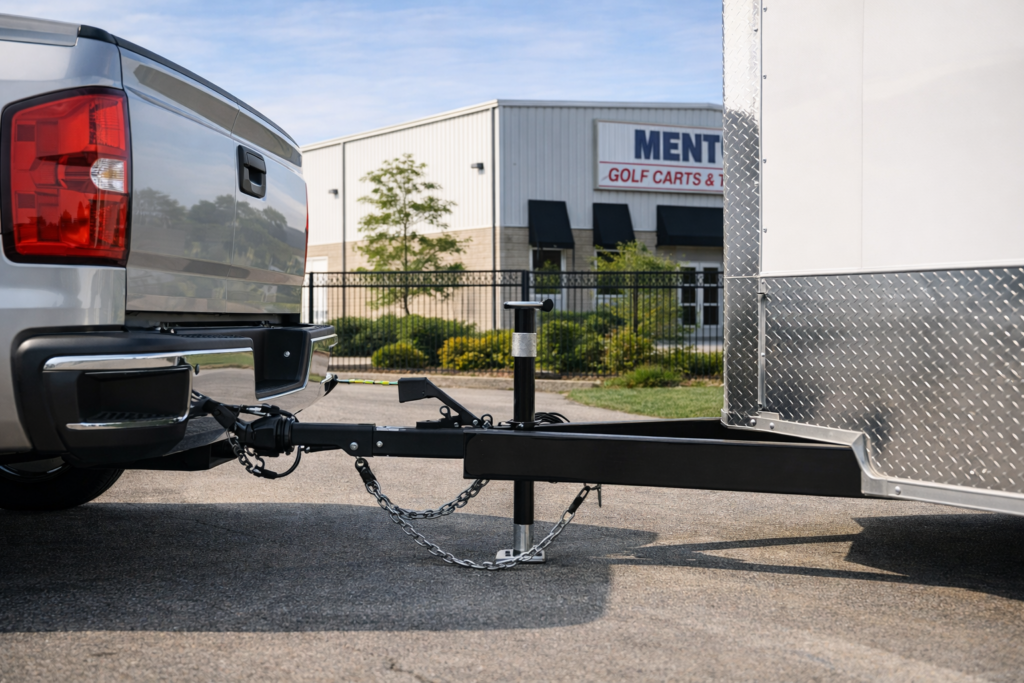
What kind of trailer do you need for landscaping, for your tow vehicle? Your truck’s towing capacity determines how big and heavy your trailer can be safely. You should know your truck’s rated towing capacity, payload, and tongue weight limits before you make a final decision. Overloading your truck or pushing it to its limits on every trip is not just inefficient—it’s unsafe.
When all these factors come together, the right landscaping trailer becomes a tool that supports your growth instead of holding you back. It allows your crew to move efficiently, present a professional image, and handle a full day’s work without continuous juggling.
Final Thoughts: Choosing the Right Trailer for Landscaping
If you’re still asking yourself what kind of trailer you need for landscaping, remember that the best choice is the one that fits your equipment, routes, budget, and plans. Open trailers, enclosed trailers, trim single-axle options, and larger tandem-axle models all have a place in the landscaping world. The key is to work through your needs systematically and partner with a dealership that understands how landscapers use their equipment every day.
When you choose wisely, your trailer becomes a rolling base of operations that helps you deliver reliable, professional service to every customer you visit.